







Send Message
Privacy statement: Your privacy is very important to Us. Our company promises not to disclose your personal information to any external company with out your explicit permission.


Choosing the right custom sheet metal processing manufacturer is a crucial decision that can directly impact product quality, production efficiency, lead times, and overall project costs. Whether you need sheet metal components for automotive systems, industrial equipment, medical devices, electronics, or aerospace applications, selecting a reliable manufacturing partner is essential for achieving consistent results and long-term success.
With numerous suppliers available worldwide, finding the right manufacturer involves more than comparing prices. A qualified sheet metal fabrication partner should offer technical expertise, advanced manufacturing capabilities, robust quality control systems, and the flexibility to support projects from rapid prototyping to high-volume production.
This guide outlines the key factors to consider when selecting a custom sheet metal processing manufacturer and how to identify a supplier capable of meeting your current and future manufacturing needs.
Industry experience often determines how effectively a manufacturer can understand your project requirements and solve production challenges. Different industries have unique expectations regarding tolerances, materials, certifications, and performance standards.
For example, automotive components often require high-volume production with strict consistency requirements, while medical equipment parts demand precision manufacturing and rigorous quality control. Aerospace applications typically involve tight tolerances, lightweight materials, and comprehensive documentation.
A manufacturer with proven experience in your industry is more likely to anticipate potential issues, recommend appropriate manufacturing methods, and deliver reliable results throughout the project lifecycle.
Not all sheet metal manufacturers offer the same range of services. Beyond basic cutting and bending, modern projects often require multiple manufacturing processes to achieve the desired functionality and appearance.
When evaluating a supplier, consider whether they can provide:
Working with a manufacturer that offers comprehensive services can simplify project management, reduce lead times, and improve quality consistency by minimizing the need for multiple suppliers.
For businesses developing new products, rapid prototyping capabilities are especially valuable. Early prototypes help validate designs, identify potential improvements, and accelerate product development.
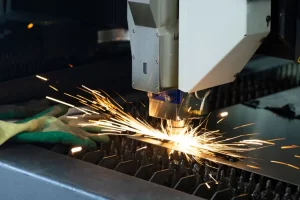
Quality is one of the most important factors when selecting a sheet metal processing manufacturer. Even minor dimensional variations can affect assembly, functionality, and product performance.
A reliable manufacturer should implement quality control throughout the entire production process, including:
Advanced inspection equipment and documented quality procedures help ensure consistent results across both prototype and production orders.
In addition to inspection processes, internationally recognized certifications such as ISO 9001 demonstrate a commitment to quality management and continuous improvement.
An experienced sheet metal manufacturer should act as more than just a supplier. Strong engineering support can help optimize designs for manufacturability, improve product performance, and reduce production costs.
By conducting Design for Manufacturability (DFM) reviews, manufacturers can identify opportunities to simplify production processes, minimize material waste, and improve assembly efficiency.
Engineering support becomes particularly important for complex sheet metal assemblies that involve multiple bends, welded structures, or tight tolerance requirements. Early collaboration can prevent costly redesigns and production delays later in the project.
Material selection plays a significant role in the performance, durability, and cost of sheet metal components. A knowledgeable manufacturer should be familiar with a wide range of materials and capable of recommending the best option for your application.
Common sheet metal materials include:
The right manufacturing partner can help balance strength, corrosion resistance, weight, appearance, and cost to achieve optimal results.
As your business grows, your manufacturing requirements may change. A supplier that can only handle small prototype orders may struggle to support larger production volumes in the future.
When evaluating manufacturers, ask about:
A manufacturer with flexible production capabilities can support both early-stage development and long-term growth without requiring you to change suppliers.
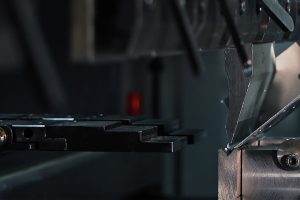
Reliable delivery and effective communication are essential for maintaining project schedules and avoiding costly delays.
A professional manufacturer should provide:
Strong communication helps ensure that technical requirements, design revisions, and production schedules are clearly understood and executed.
While competitive pricing is important, choosing a supplier based solely on the lowest quotation can lead to quality issues, delays, and higher overall costs.
Instead, evaluate the total value a manufacturer provides, including:
A slightly higher initial cost may result in lower overall project expenses by reducing defects, rework, and supply chain disruptions.
At CTT Technology, we provide comprehensive custom sheet metal fabrication solutions for customers across automotive, electronics, medical, aerospace, and industrial sectors. From simple brackets and panels to complex welded assemblies, our team supports every stage of the manufacturing process.
Our capabilities include:
By combining advanced manufacturing equipment with experienced engineering support and strict quality control, we help customers transform concepts into high-quality products efficiently and cost-effectively.
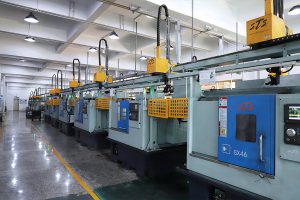
Choosing the right custom sheet metal processing manufacturer requires careful consideration of industry experience, manufacturing capabilities, quality control systems, engineering support, material expertise, and production capacity.
The ideal manufacturing partner should not only produce high-quality parts but also contribute to the success of your project through technical guidance, reliable delivery, and scalable production solutions.
By selecting a supplier with the right combination of expertise and capabilities, businesses can improve product quality, reduce manufacturing risks, and build a stronger foundation for long-term growth.
Learn how DFM improves CNC bending accuracy, reduces defects, and lowers production costs with practical sheet metal design tips.
Learn everything about GD&T in CNC machining, including symbols, benefits, and best practices. Improve CNC machining precision and optimize CNC machining tolerances.
Learn essential sheet metal design guidelines for bends, DFM principles, and aluminum part fabrication. Discover how CNC bending, precision sheet metal processing, and CNC sheet metal bending improve manufacturability, accuracy, and production efficiency.
Learn everything about CNC machining tolerances, including standard tolerance ranges, ISO standards, GD&T, cost factors, and how precision CNC machining improves quality.
Email to this supplier
Author:
Ms. CTT TECHNOLOGY (UK) LIMITED
E-mail:
Phone/WhatsApp:

Privacy statement: Your privacy is very important to Us. Our company promises not to disclose your personal information to any external company with out your explicit permission.