







Send Message
Privacy statement: Your privacy is very important to Us. Our company promises not to disclose your personal information to any external company with out your explicit permission.


The medical device industry is undergoing rapid transformation. Advances in minimally invasive surgery, robotic-assisted procedures, personalized implants, and diagnostic technologies are driving demand for increasingly sophisticated medical components. At the same time, manufacturers must comply with strict regulatory standards while maintaining exceptional product quality and reliability.
In this highly demanding environment, precision manufacturing is no longer simply a competitive advantage—it is a fundamental requirement. Medical devices often contain intricate geometries, miniature features, and tight tolerances that leave little room for error. Even minor dimensional deviations can affect functionality, patient outcomes, and regulatory compliance.
As a result, many medical device manufacturers are turning to 5-axis CNC machining to meet these challenges. Compared with conventional machining methods, 5-axis technology provides greater flexibility, improved accuracy, and the ability to produce complex components in fewer operations. From surgical instruments and orthopedic implants to robotic surgery systems and diagnostic equipment, 5-axis machining is playing an increasingly important role in modern healthcare manufacturing.
The requirements placed on medical components are significantly higher than those found in many other industries. A bracket used in industrial equipment may tolerate minor dimensional variations, but a surgical instrument or implant often cannot.
Medical devices frequently interact directly with the human body, requiring exact dimensional accuracy and exceptional surface quality. Orthopedic implants must match anatomical structures with precision. Surgical instruments need consistent performance during delicate procedures. Diagnostic equipment relies on accurately machined components to maintain calibration and measurement reliability.
At the same time, manufacturers must meet stringent quality management requirements such as ISO 13485 and FDA regulations. These standards demand consistent production processes, repeatable results, and comprehensive quality control throughout the manufacturing cycle.
Meeting these requirements requires machining technologies capable of delivering both precision and consistency at scale. This is where 5-axis CNC machining offers significant advantages.
Traditional 3-axis CNC machines operate by moving the cutting tool along the X, Y, and Z axes. While effective for many manufacturing applications, they often require multiple setups when machining complex components with features located on several sides of a workpiece.
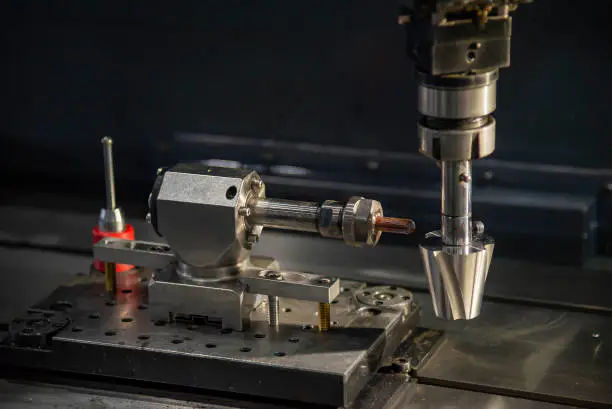
A 5-axis CNC machine introduces two additional rotational axes, allowing either the cutting tool or the workpiece to move simultaneously in multiple directions. This added freedom enables the machine to approach complex surfaces from virtually any angle during a single setup.
For medical manufacturers, this capability reduces the need for repeated repositioning, minimizes cumulative alignment errors, and significantly improves overall machining efficiency. More importantly, it enables the production of highly sophisticated geometries that would be difficult or impossible to achieve using conventional machining methods.
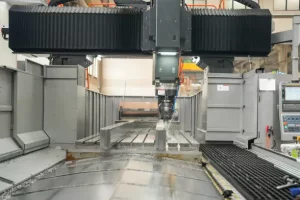
Modern medical devices continue to evolve toward smaller, lighter, and more complex designs.
Examples include:
Many of these products feature:
Traditional 3-axis machining may require multiple setups or secondary operations to create these features.
With 5-axis machining, manufacturers can produce highly complex parts in a single operation, reducing production time while maintaining exceptional accuracy.
Surface finish is a critical factor in many medical applications. Components intended for direct contact with biological tissues often require exceptionally smooth surfaces to support biocompatibility and reduce the risk of bacterial adhesion. Surgical instruments benefit from polished finishes that facilitate cleaning and sterilization, while precision diagnostic equipment relies on high-quality mating surfaces to ensure reliable operation.
One of the advantages of 5-axis machining is its ability to maintain optimal tool orientation throughout the cutting process. Because the cutting tool can continuously adjust its angle relative to the workpiece surface, cutting conditions remain more stable, reducing vibration and tool deflection.
The result is improved surface integrity, reduced machining marks, and greater consistency across complex geometries. In many cases, manufacturers can also reduce secondary polishing and finishing operations, shortening production cycles and lowering manufacturing costs.
The medical device market is becoming increasingly competitive, placing greater emphasis on rapid product development and shorter time-to-market. Whether developing a new implant design, surgical instrument, or diagnostic device, manufacturers must move efficiently from concept validation to clinical testing and commercial production.
5-axis CNC machining supports this process by enabling rapid production of highly accurate prototypes that closely replicate final production components. Engineers can evaluate form, fit, and function earlier in the development cycle while reducing the need for extensive design revisions.
Because complex features can often be produced in a single machining operation, prototype lead times are shortened, allowing development teams to iterate more quickly and accelerate product commercialization.
Medical device components are commonly manufactured from challenging materials, including:
These materials offer excellent strength, corrosion resistance, and biocompatibility but can be difficult to machine.
Advanced 5-axis CNC systems optimize cutting angles and tool paths, improving machining efficiency while reducing tool wear and material waste.
This capability is particularly valuable when machining expensive implant-grade materials.
Medical device manufacturing is governed by strict quality standards and regulatory requirements.
Examples include:
5-axis CNC machining contributes to compliance by providing:
These advantages help manufacturers maintain consistent quality across production batches while meeting industry standards.

As healthcare technology continues to advance, medical devices will become increasingly personalized, intelligent, and complex. Patient-specific implants, robotic surgery platforms, and next-generation diagnostic systems will require manufacturing solutions capable of producing intricate geometries with exceptional precision.
5-axis CNC machining is well positioned to support these emerging trends. By combining flexibility, accuracy, and production efficiency, it enables manufacturers to transform innovative medical concepts into reliable, high-performance products.
For companies seeking to remain competitive in the evolving healthcare market, investment in advanced machining technologies is becoming an essential part of long-term growth and innovation strategies.
The growing complexity of modern medical devices demands manufacturing technologies capable of delivering precision, consistency, and efficiency at every stage of production. 5-axis CNC machining addresses these requirements by enabling the accurate production of complex geometries, improving surface quality, reducing setup-related errors, and accelerating product development cycles.
As medical manufacturers continue to pursue higher performance standards and stricter regulatory compliance, 5-axis machining will play an increasingly important role in ensuring product quality and manufacturing excellence.
At CTT Technology, we provide precision CNC machining solutions for medical device manufacturers worldwide. From rapid prototyping to full-scale production, our engineering team delivers high-quality components designed to meet the demanding requirements of the healthcare industry. Contact us today to discuss your next medical manufacturing project.
Explore aerospace sheet metal processing, from precision cutting and forming to welding and finishing, for reliable custom aerospace components.
Discover how advanced CNC technology is transforming custom machined parts with higher precision, faster production, flexible volumes, and smarter manufacturing.
Learn how CNC machining tolerances impact automotive component accuracy and reliability, including standards, key factors, and precision manufacturing solutions.
Discover how precision machining supports HPP equipment manufacturing with high-quality custom metal parts, CNC machining, and sheet metal fabrication solutions.
Email to this supplier
Author:
Ms. CTT TECHNOLOGY (UK) LIMITED
E-mail:
Phone/WhatsApp:

Privacy statement: Your privacy is very important to Us. Our company promises not to disclose your personal information to any external company with out your explicit permission.