








Send Message
Privacy statement: Your privacy is very important to Us. Our company promises not to disclose your personal information to any external company with out your explicit permission.


Sheet metal fabrication is widely used in industries such as automotive, electronics, medical devices, aerospace, and industrial equipment, and is an indispensable process in modern manufacturing. During product development and production, many companies focus not only on product quality and delivery times but also on manufacturing costs. This is particularly true during rapid prototyping, small-batch trial production, and mass production phases, where different design solutions, material selections, and processing methods directly impact the final quote.
What exactly comprises the cost of sheet metal fabrication? In reality, fabrication costs are not determined by a single factor but are influenced by a combination of factors, including materials, processing methods, labor, tooling, surface treatment, production volume, and lead time. Understanding these core cost components not only helps companies manage their budgets more effectively but also enables them to optimize manufacturing solutions early in the product design phase, thereby enhancing overall production efficiency and cost competitiveness.
Material is one of the most important cost drivers in sheet metal manufacturing. Common materials include stainless steel, aluminum, carbon steel, galvanized steel, copper, and various alloys. The final costLearn the complete sheet metal fabrication cost breakdown including material, labor, tooling, finishing, and production volume, and how to reduce cost effectively. depends heavily on material type, thickness, and market price fluctuations. For example, aluminum is generally more expensive than carbon steel, while thicker sheets significantly increase both material consumption and cutting difficulty. In addition, nesting efficiency during sheet layout also impacts waste rate, meaning poor layout design can directly increase material cost.
Once material is selected, the next major cost comes from the cutting and forming process. Common methods include laser cutting, CNC punching, waterjet cutting, and plasma cutting. Each method has different cost implications depending on precision requirements and geometry complexity. Parts with high hole density, tight tolerances, or intricate shapes require longer machine runtime and slower processing speeds, which naturally increases cost. In general, higher precision equals higher machining time and higher pricing.
Labor cost is often underestimated but plays a major role in total pricing. It includes engineering design (DFM analysis), machine setup, programming, manual assembly, and quality inspection. Complex designs with multiple bending operations, tight tolerances, or assembly requirements require more skilled technicians and longer production time. Simplifying geometry, reducing unnecessary features, and standardizing design structures can effectively reduce labor cost while improving manufacturability.
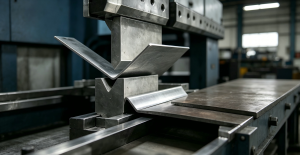
Tooling costs mainly apply to bending, stamping, and forming operations. Simple prototypes may require little or no tooling investment, while mass production often requires custom dies and fixtures. Although tooling increases initial cost, it becomes highly cost-effective in large production volumes because the cost is spread across thousands of units. Therefore, production strategy (prototype vs mass production) significantly influences tooling economics.
Surface finishing improves both functionality and appearance, but also adds to total cost. Common finishing processes include powder coating, anodizing, electroplating, brushing, and polishing. The cost is influenced by surface area, coating thickness, color requirements, and cosmetic standards. Higher aesthetic requirements usually mean more processing steps and stricter quality inspection, which increases overall finishing cost.
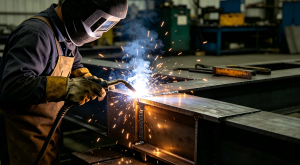
For multi-part structures, assembly and welding become an important cost factor. Processes such as TIG welding, MIG welding, spot welding, riveting, and mechanical fastening require precise alignment and skilled labor. The more complex the assembly structure, the more time and labor are required, directly increasing cost.
Production quantity has a significant impact on unit price. In general:
This is because setup, tooling, and engineering costs are distributed across more units as volume increases.
Delivery time also affects cost. Expedited orders often require priority scheduling, overtime production, and faster logistics arrangements, all of which increase total cost. Planning production ahead of time is one of the simplest ways to reduce unnecessary expenses.
Cost optimization is not only about choosing cheaper materials—it starts from the design stage. Key strategies include:
Early collaboration with an experienced manufacturer often leads to the most significant cost savings.
At CTT Technology, we specialize in high-precision sheet metal fabrication for global clients across automotive, electronics, aerospace, medical, and industrial sectors. From simple brackets to complex welded assemblies, we support full-cycle manufacturing including prototyping, small batch production, and large-scale manufacturing. Our engineering-driven approach ensures both cost efficiency and high manufacturing quality.
Sheet metal fabrication cost is determined by multiple interconnected factors including material selection, machining process, labor, tooling, surface finishing, production volume, and lead time. By understanding these cost drivers, engineers and procurement teams can make better design and sourcing decisions that balance performance and cost efficiency. Working with an experienced partner like CTT Technology ensures not only high-quality manufacturing but also optimized cost control throughout the entire production process.
Explore aerospace sheet metal processing, from precision cutting and forming to welding and finishing, for reliable custom aerospace components.
Discover how advanced CNC technology is transforming custom machined parts with higher precision, faster production, flexible volumes, and smarter manufacturing.
Learn how CNC machining tolerances impact automotive component accuracy and reliability, including standards, key factors, and precision manufacturing solutions.
Discover how precision machining supports HPP equipment manufacturing with high-quality custom metal parts, CNC machining, and sheet metal fabrication solutions.
Email to this supplier
Author:
Ms. CTT TECHNOLOGY (UK) LIMITED
E-mail:
Phone/WhatsApp:

Privacy statement: Your privacy is very important to Us. Our company promises not to disclose your personal information to any external company with out your explicit permission.