








Send Message
Privacy statement: Your privacy is very important to Us. Our company promises not to disclose your personal information to any external company with out your explicit permission.


In today's competitive manufacturing landscape, product quality and precision are critical factors that influence performance, reliability, and customer satisfaction. Industries such as automotive, electronics, medical devices, aerospace, and industrial equipment all rely on accurately manufactured sheet metal components to ensure consistent functionality and long-term durability.
A professional sheet metal processing manufacturer plays a crucial role in transforming product designs into high-quality finished components. Beyond fabrication, manufacturers contribute valuable engineering expertise, advanced production technologies, and comprehensive quality control processes that help businesses achieve superior product performance while maintaining cost efficiency.
Product quality directly impacts the functionality, lifespan, and market reputation of a product. Even small dimensional inaccuracies can result in assembly issues, performance failures, or increased maintenance costs.
High-precision sheet metal components offer several benefits:
For industries with strict tolerance requirements, precision manufacturing is not merely desirable—it is essential.
Modern sheet metal processing manufacturers utilize advanced fabrication equipment to achieve tight tolerances and consistent production quality.
CNC Laser Cutting
CNC laser cutting provides exceptional accuracy and clean edges, making it ideal for producing intricate designs and complex geometries. Compared to conventional cutting methods, laser cutting minimizes material deformation and improves repeatability.
CNC Punching
High-speed CNC punching efficiently creates holes, slots, and custom patterns while maintaining dimensional consistency throughout large production runs.
CNC Bending
Precision press brake systems ensure accurate bending angles and repeatable forming results. Advanced CNC controls help compensate for material variations and reduce manufacturing errors.
Robotic Welding
Automated welding systems improve weld strength, consistency, and appearance while minimizing human-related variability during production.
By integrating these technologies, manufacturers can consistently produce components that meet demanding quality standards and customer specifications.

An experienced sheet metal processing manufacturer provides far more than fabrication services. Engineering support is often a key factor in improving product quality and reducing production costs.
Manufacturers commonly assist customers with:
Identifying manufacturing challenges early in the design stage helps prevent costly revisions and production delays later in the project.
Selecting the right material is fundamental to achieving the desired balance of strength, durability, weight, and cost.
Common sheet metal materials include:
Each material exhibits different characteristics in terms of corrosion resistance, mechanical strength, conductivity, and formability. An experienced manufacturer understands how these materials behave during cutting, bending, welding, and finishing processes, helping customers choose the most suitable option for their application.
Quality assurance is one of the most important responsibilities of a professional sheet metal processing manufacturer. A robust quality management system helps ensure that every component meets customer specifications and industry standards.
Incoming Material Inspection
Raw materials are verified to ensure compliance with required specifications and certifications before production begins.
In-Process Inspection
Critical dimensions and process parameters are monitored throughout production to identify potential deviations at an early stage.
Final Product Verification
Finished parts undergo dimensional inspections and visual quality checks before shipment to ensure conformity with customer requirements.
Continuous Improvement
Manufacturers continuously evaluate production performance and customer feedback to enhance process stability and product quality.
Through systematic quality control, manufacturers can minimize defects, improve consistency, and increase customer satisfaction.
Rapid prototyping allows companies to validate designs before moving into full-scale production. This stage is critical for identifying potential design issues, evaluating functionality, and optimizing manufacturability.
Key advantages of rapid prototyping include:
For startups and established manufacturers alike, prototype development serves as an important step toward achieving higher-quality final products.
As businesses grow, their manufacturing requirements often evolve from prototype development and small-batch production to full-scale mass manufacturing. A reliable sheet metal processing manufacturer can seamlessly support this transition by providing flexible production capacity, standardized processes, and consistent quality control across all order volumes. This scalability allows companies to bring products to market faster while maintaining the precision and reliability customers expect.
In addition, scalable manufacturing capabilities help businesses optimize costs, improve supply chain efficiency, and respond quickly to changing market demands. By partnering with an experienced sheet metal manufacturer that can accommodate both low-volume and high-volume production, companies gain the flexibility needed to support product launches, market expansion, and long-term business growth without compromising quality or delivery performance.
Precision sheet metal fabrication is essential across a wide range of industries where reliability, safety, and performance are critical.
Automotive Industry
High-precision brackets, enclosures, chassis components, and machining precision parts contribute to vehicle safety and reliability.
Electronics Industry
Tight tolerances are essential for enclosures, heat sinks, mounting brackets, and other electronic components.
Medical Device Industry
Medical equipment requires exceptional dimensional accuracy and strict quality standards to ensure reliable operation and patient safety.
Aerospace Industry
Aerospace applications demand lightweight, high-strength components manufactured to extremely precise specifications.
Industrial Equipment Industry
Precision sheet metal parts improve equipment durability, operational efficiency, and long-term performance.
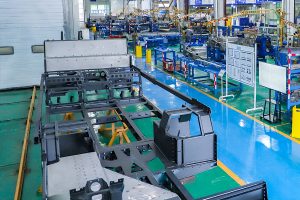
Selecting the right sheet metal processing manufacturer is one of the most important decisions in any product development or manufacturing project. The capabilities, experience, and reliability of your manufacturing partner can directly impact product quality, production efficiency, lead times, and overall project costs. A qualified manufacturer not only produces parts according to specifications but also provides valuable engineering support and process optimization throughout the production cycle.
When evaluating potential manufacturing partners, businesses should consider several key factors:
Beyond technical capabilities, effective communication and responsiveness are equally important. A manufacturer that understands your project requirements, proactively addresses challenges, and offers practical solutions can significantly reduce development risks and improve overall project outcomes. Building a long-term partnership with a trusted sheet metal processing manufacturer enables businesses to achieve consistent quality, faster product launches, and greater competitiveness in their respective markets.
The role of a sheet metal processing manufacturer extends far beyond producing metal parts. By combining advanced manufacturing technologies, engineering expertise, material knowledge, and rigorous quality control systems, manufacturers help businesses achieve higher product quality, tighter tolerances, and greater production efficiency.
Whether you require rapid prototyping, low-volume production, or high-volume manufacturing, partnering with an experienced sheet metal processing manufacturer can reduce production risks, improve product consistency, and create a strong foundation for long-term business success.
Explore aerospace sheet metal processing, from precision cutting and forming to welding and finishing, for reliable custom aerospace components.
Discover how advanced CNC technology is transforming custom machined parts with higher precision, faster production, flexible volumes, and smarter manufacturing.
Learn how CNC machining tolerances impact automotive component accuracy and reliability, including standards, key factors, and precision manufacturing solutions.
Discover how precision machining supports HPP equipment manufacturing with high-quality custom metal parts, CNC machining, and sheet metal fabrication solutions.
Email to this supplier
Author:
Ms. CTT TECHNOLOGY (UK) LIMITED
E-mail:
Phone/WhatsApp:

Privacy statement: Your privacy is very important to Us. Our company promises not to disclose your personal information to any external company with out your explicit permission.