






Send Message
Privacy statement: Your privacy is very important to Us. Our company promises not to disclose your personal information to any external company with out your explicit permission.


In modern manufacturing, CNC machining plays a critical role in producing precision components for industries such as automotive, electronics, aerospace, medical devices, and industrial equipment. Among the various machining processes available today, CNC turning remains one of the most efficient methods for manufacturing cylindrical and rotational parts.
However, many buyers and engineers are unsure how CNC turning differs from other machining methods such as CNC milling, drilling, or grinding. Understanding these differences can help companies select the most suitable manufacturing process, improve production efficiency, and reduce overall costs.
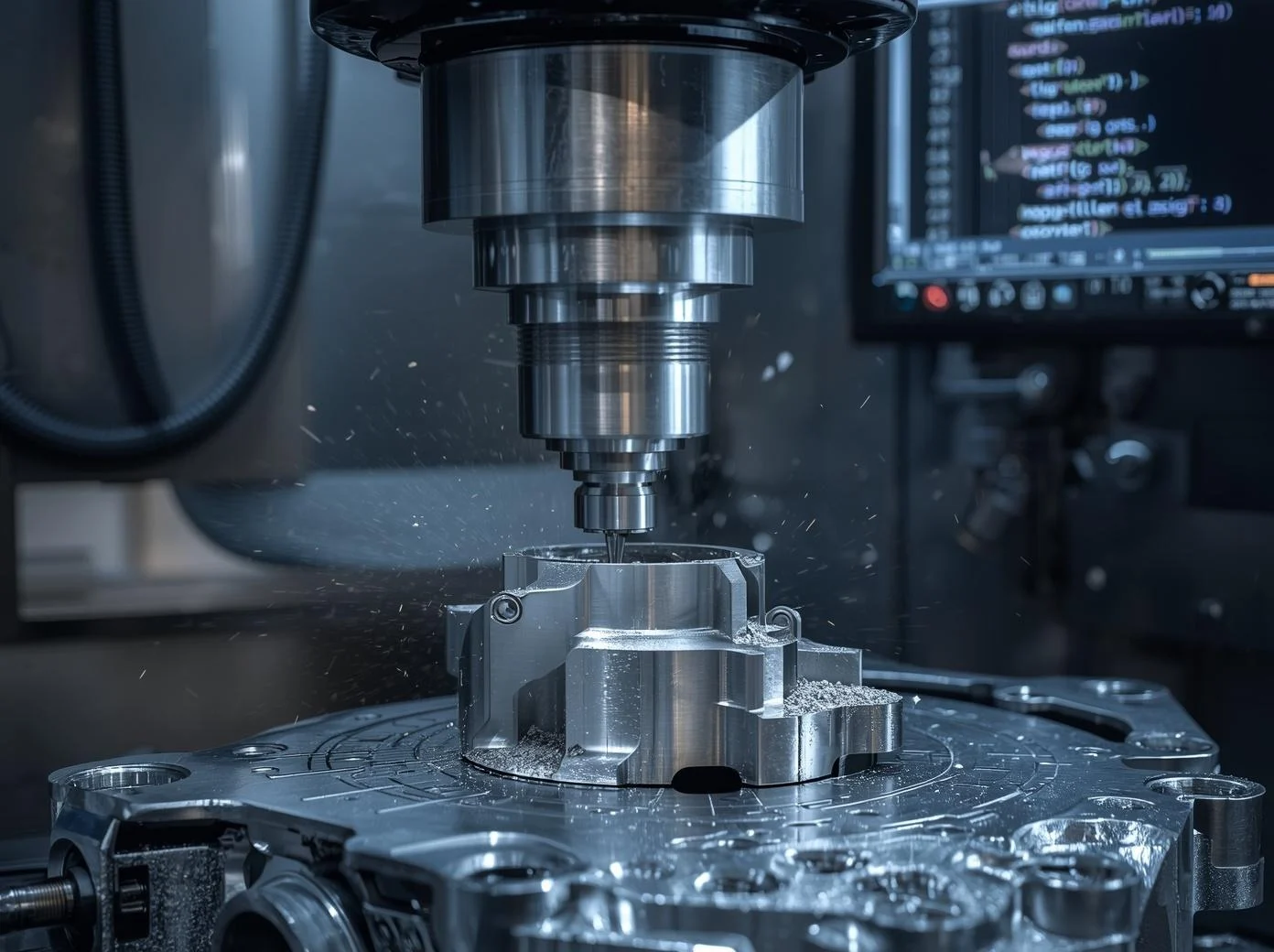
CNC turning is a subtractive manufacturing process performed on a CNC lathe or turning center. During machining, the workpiece rotates at high speed while a cutting tool removes material to create the desired shape and dimensions.
Unlike other machining methods where the cutting tool performs the primary rotational movement, CNC turning relies on the rotation of the workpiece itself. This makes it particularly effective for producing parts with circular cross-sections, including shafts, bushings, pins, threaded components, and various precision connectors.
Because the process is computer-controlled, CNC turning delivers excellent dimensional accuracy, repeatability, and surface finish, making it ideal for both prototype development and high-volume production.
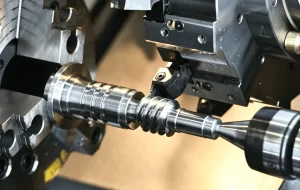
CNC turning and CNC milling differ significantly in machining principles and suitable applications. The comparison below highlights their key distinctions:
| Comparison Aspect | CNC Turning (Turning) | CNC Milling (Milling) |
|---|---|---|
| Machining Principle | Workpiece rotates while the cutting tool moves linearly | Cutting tool rotates while the workpiece remains fixed |
| Suitable Part Types | Cylindrical and rotational parts | Complex 3D and irregular geometries |
| Main Features Machined | Outer diameter, inner bore, threads, grooves | Flat surfaces, pockets, slots, complex contours |
| Machining Efficiency | High efficiency for round parts | More flexible for complex shapes |
| Accuracy Performance | High consistency for cylindrical dimensions | Stable accuracy for multi-face machining |
| Surface Finish | Excellent on cylindrical surfaces | Better on flat and complex surfaces |
| Typical Applications | Shafts, bushings, pins, connectors | Housings, brackets, structural components |
Summary:
CNC turning is best suited for high-efficiency production of rotational parts, while CNC milling is ideal for complex geometries. In modern manufacturing, both processes are often combined to complete a single component.
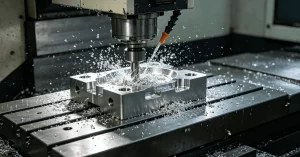
CNC turning, drilling, and grinding serve different roles in the manufacturing process. The comparison below outlines their core differences:
| Comparison Aspect | CNC Turning (Turning) | Drilling | Grinding |
|---|---|---|---|
| Function Role | Primary shaping process | Hole-making process | Precision finishing process |
| Machined Geometry | Complete rotational components | Single holes | Finished surfaces |
| Machining Method | Workpiece rotates + cutting tool removes material | Axial cutting with drill bit | High-speed abrasive grinding |
| Accuracy Level | Medium to high precision | General precision | Extremely high precision |
| Surface Quality | Good surface finish | Basic surface quality | Excellent surface finish |
| Efficiency | High efficiency | High for simple hole operations | Lower due to finishing nature |
| Cost Level | Medium | Low | High |
| Typical Use Cases | Shafts, sleeves, threaded parts | Drilled holes, positioning holes | Precision finishing, tight tolerance correction |
Summary:
Drilling is primarily used for creating holes, grinding is used for ultra-precision finishing, while CNC turning is the core process for shaping rotational components. In real manufacturing workflows, these processes are often combined to meet functional and precision requirements.
One of the biggest advantages of CNC turning is its efficiency. Since the workpiece rotates continuously, material can be removed quickly while maintaining high precision. This makes the process highly cost-effective for medium- and high-volume production runs.
CNC turning also provides excellent consistency, which is essential for industries where every component must meet strict quality requirements. Modern CNC lathes can repeatedly produce parts with tight tolerances and smooth surface finishes, minimizing the need for secondary operations.
Another key benefit is material versatility. CNC turning can be used with a wide range of metals and engineering plastics, including aluminum, stainless steel, brass, copper, titanium, ABS, POM, and PEEK.
CNC turning is typically the preferred manufacturing process when a component features rotational symmetry or cylindrical geometry. Parts such as shafts, bushings, spacers, fittings, fasteners, and valve components are commonly produced using turning operations.
For companies seeking a combination of precision, speed, and cost efficiency, CNC turning often provides a more economical solution than alternative machining methods. It is especially advantageous when producing large quantities of identical parts where consistency and productivity are critical.
While CNC turning, milling, drilling, and grinding all play important roles in modern manufacturing, each process serves a different purpose. CNC turning stands out as the most efficient solution for producing cylindrical and rotational components with high accuracy and excellent repeatability.
Understanding the strengths and limitations of each machining method enables engineers and procurement teams to make better manufacturing decisions and optimize production costs.
At CTT Technology, we provide custom CNC machining solutions for rapid prototyping, low-volume production, and mass manufacturing. With advanced machining equipment, strict quality control, and experienced engineering support, we help customers across multiple industries achieve reliable, high-precision manufacturing results.
Learn how DFM improves CNC bending accuracy, reduces defects, and lowers production costs with practical sheet metal design tips.
Learn everything about GD&T in CNC machining, including symbols, benefits, and best practices. Improve CNC machining precision and optimize CNC machining tolerances.
Learn essential sheet metal design guidelines for bends, DFM principles, and aluminum part fabrication. Discover how CNC bending, precision sheet metal processing, and CNC sheet metal bending improve manufacturability, accuracy, and production efficiency.
Learn how Design for Manufacturing (DFM) reduces production costs, improves quality, and optimizes sheet metal fabrication, laser cutting tolerances, and CNC machining.
Email to this supplier
Author:
Ms. CTT TECHNOLOGY (UK) LIMITED
E-mail:
Phone/WhatsApp:

Privacy statement: Your privacy is very important to Us. Our company promises not to disclose your personal information to any external company with out your explicit permission.